Thinking in Shades of Grey

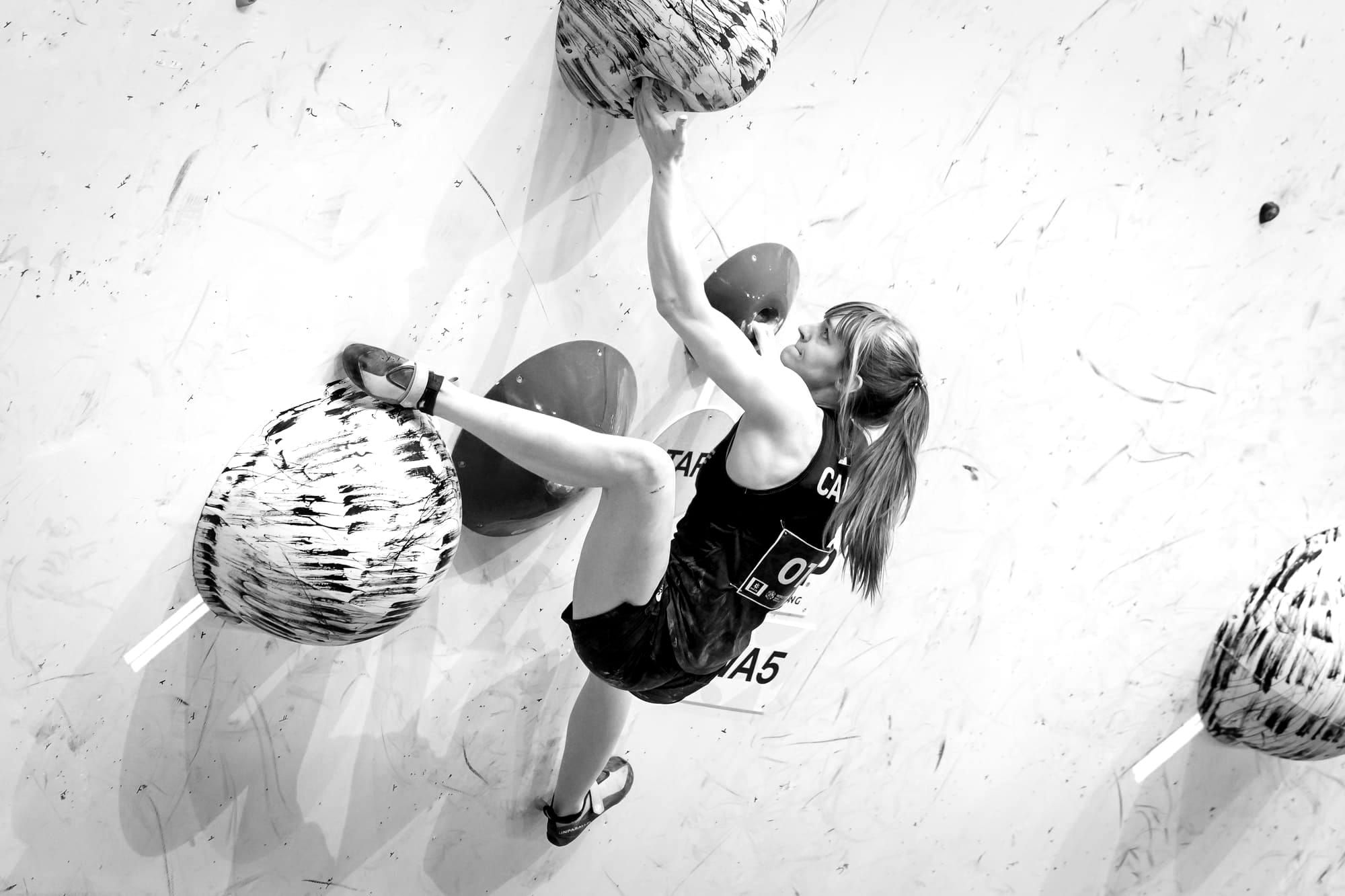
I've been thinking a lot since the season ended.
Well, technically it's not over, with one more event in October, but for me, the 2026 season is over, and it didn't end the way I wanted it to.
This season was strange, to put it lightly. We started in China, then a few weeks later, we turned up the speed and competed in Switzerland, Spain, the Czech Republic, and Innsbruck back-to-back.
Four weeks, four World Cups.
China went well. I felt strong, I felt capable, and more than anything, I was so excited to start the season. I was excited for the 15-hour flight. I was excited to be in China on my own and navigate the cultural, environmental, and dietary differences. I love competing in China.
I made semifinals and finished in 13th place. It was the fifth-best result of my career.
Then we buckled up for six weeks in Europe. Zach joined me for Switzerland, Spain, the Czech Republic, and a brief training week in Germany. My mom and sister joined me in Switzerland and Spain, and my dad joined me in Austria. It was a team effort.
Over the course of my time competing in World Climbing events, I've never seen four European boulder World Cups in a row. Sometimes in a season, there's room to pause, fly home for a week, or simply go a weekend without a World Cup. This year was intense. Let's just leave it at that.
But my tolerance for travel is fairly high. I was eager for the logistics. I enjoy being in Europe. I lived here for a year, after all.
So the schedule was non-stop, but I was excited by the challenge.
Our first European stop was in the Swiss capital, Bern. It's an event I've been to quite a few times now, so I was familiar with the venue. This year, however, was a strange event for me.
My performance was strong on the first three boulders, but I missed a crucial technique on the fourth boulder that cost me semifinals. I finished in 37th.
It was a bit of a kick in the pants, but I was more frustrated by the circumstances around it than my own performance. Yes, I was disappointed that I didn't see the correct beta in time, and that was entirely my fault, but the margin for error to advance to semifinals was so small. The boulders were too easy for the field. Athletes all the way down to 17th place had five tops, which is very uncommon for World Cups. I was down in 37th with three tops and five zones. I felt sort of stupid that one move made such a huge impact on my score.
So I resolved to put Bern behind me as soon as possible. Zach advised me to as well. There wasn't a huge deficit, there wasn't a huge takeaway, it just came down to a move that I didn't see on that day. Okay, fine. Europe is just getting started.
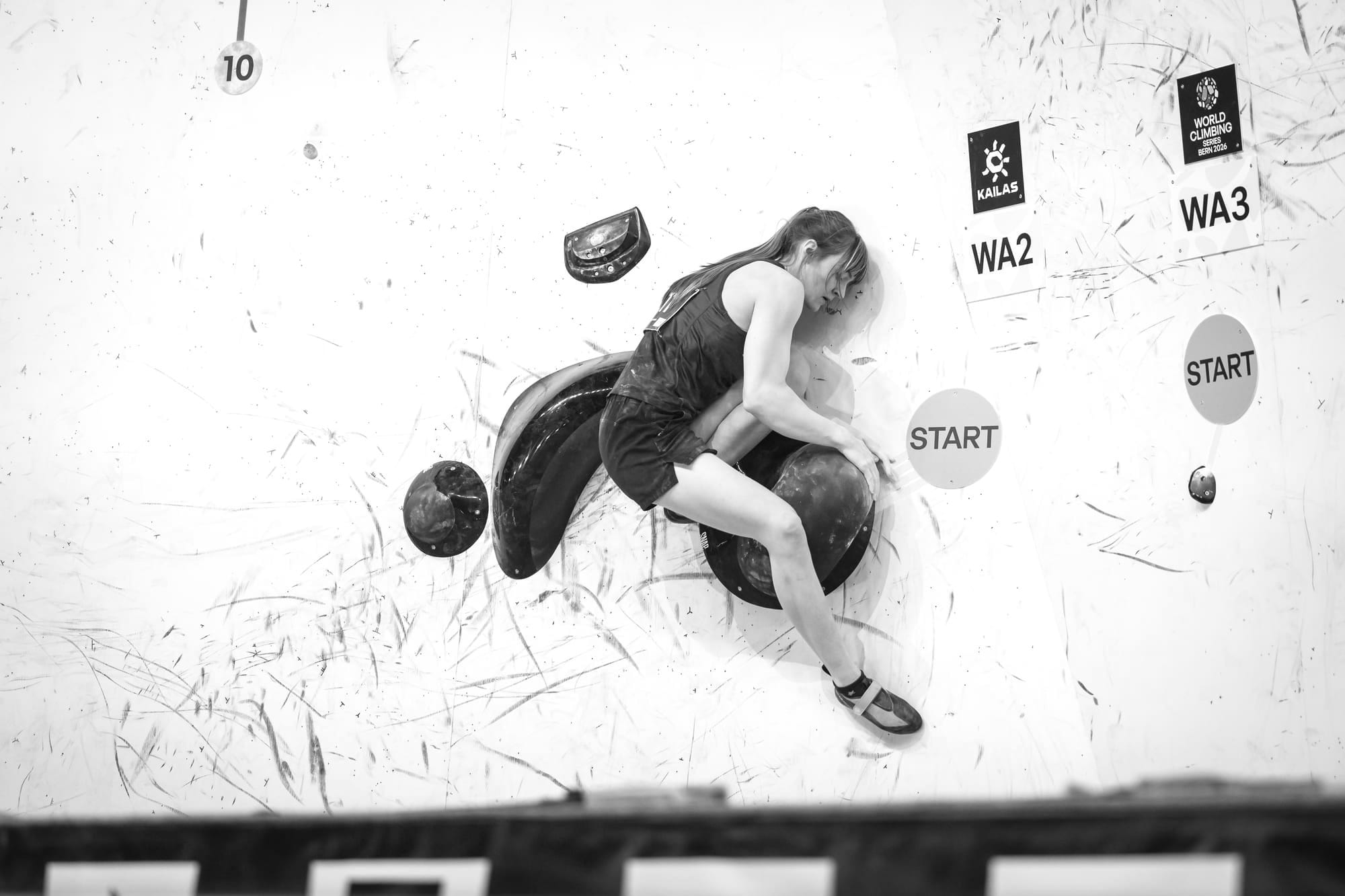
Madrid was HOT.
Landlocked in the middle of Spain, Madrid was like a desert, pushing temperatures to the mid to high 30s. And yet, I was able to perform.
I made semifinals and finished in a respectable, albeit underwhelming, 20th place. I felt pretty good in Spain, and my semifinal performance had some great takeaways to work on for next year.
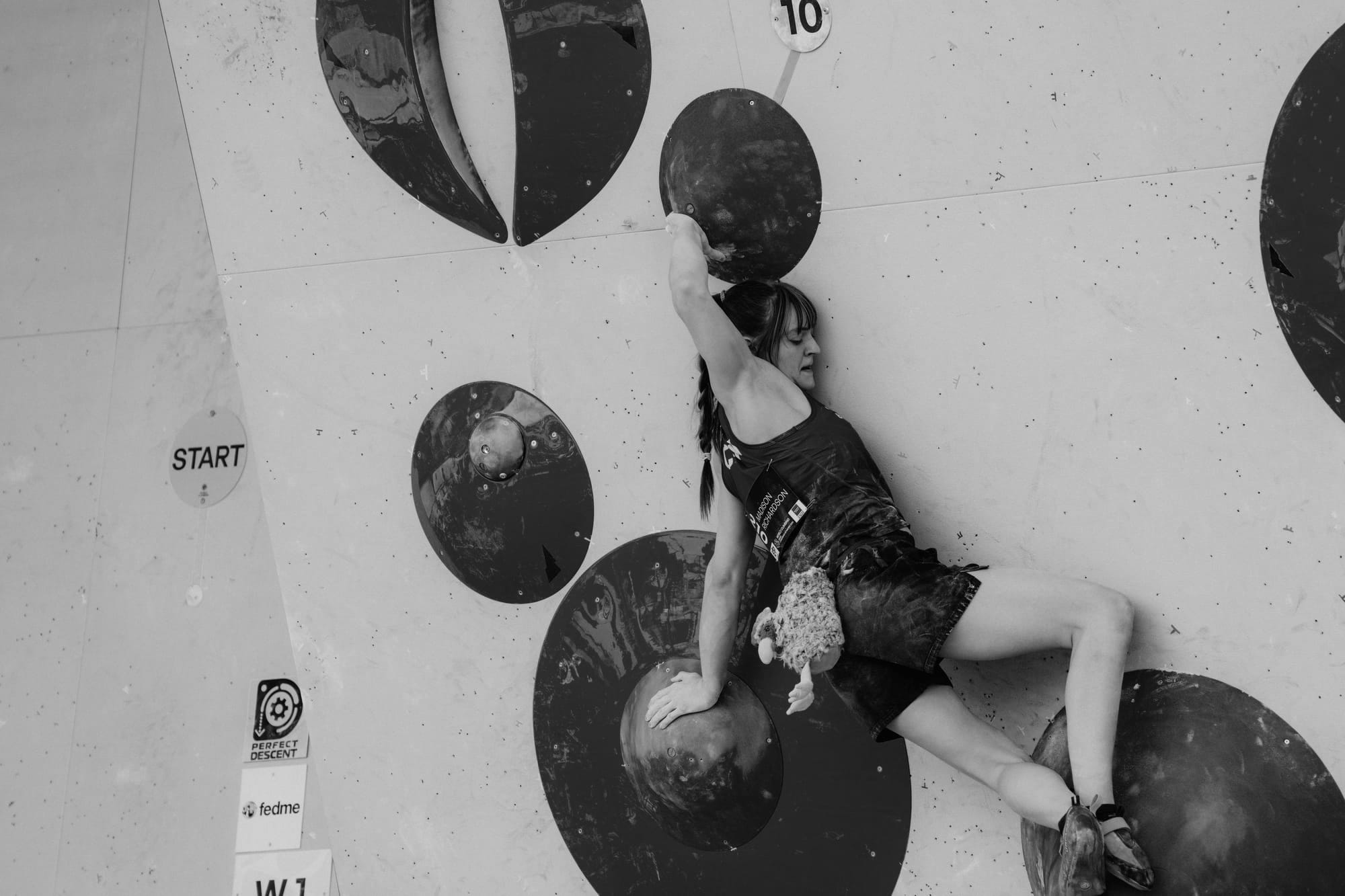
Five days later, we were competing again in Prague.
Prague has been a staple on the World Cup calendar since 2023. I've attended every year, and every year, I missed the semifinal. 2026 marks four years in a row of missing the semi, but this one feels different. Worse, perhaps.
I finished my qualification round in Prague with four tops and five zones, a nearly perfect round aside from attempts. That score in Madrid, by contrast, would put you in 3rd place going into semis. In Prague, that score earned me 31st place.
I was frustrated because my error in the round was even smaller than the one I made in Bern. I hit the finish hold on boulder five too far to the left and didn't use my thumb. Hardly something I need to take home with me and spend training time working on. It's important to acknowledge, but not the kind of error that should kick you out of a semi. I've never seen five tops be the bar for making semifinals, and I certainly didn't expect it after Bern went a similar way just a few weeks prior.
I left Prague feeling upset with factors that were out of my control - the level of the boulders. I felt that I didn't have a chance to properly show my strengths, or weaknesses for that matter. When boulders are too easy for the field, you don't separate athletes based on their relative skillsets, you end up separating based on attempts, and honestly a little bit of luck.
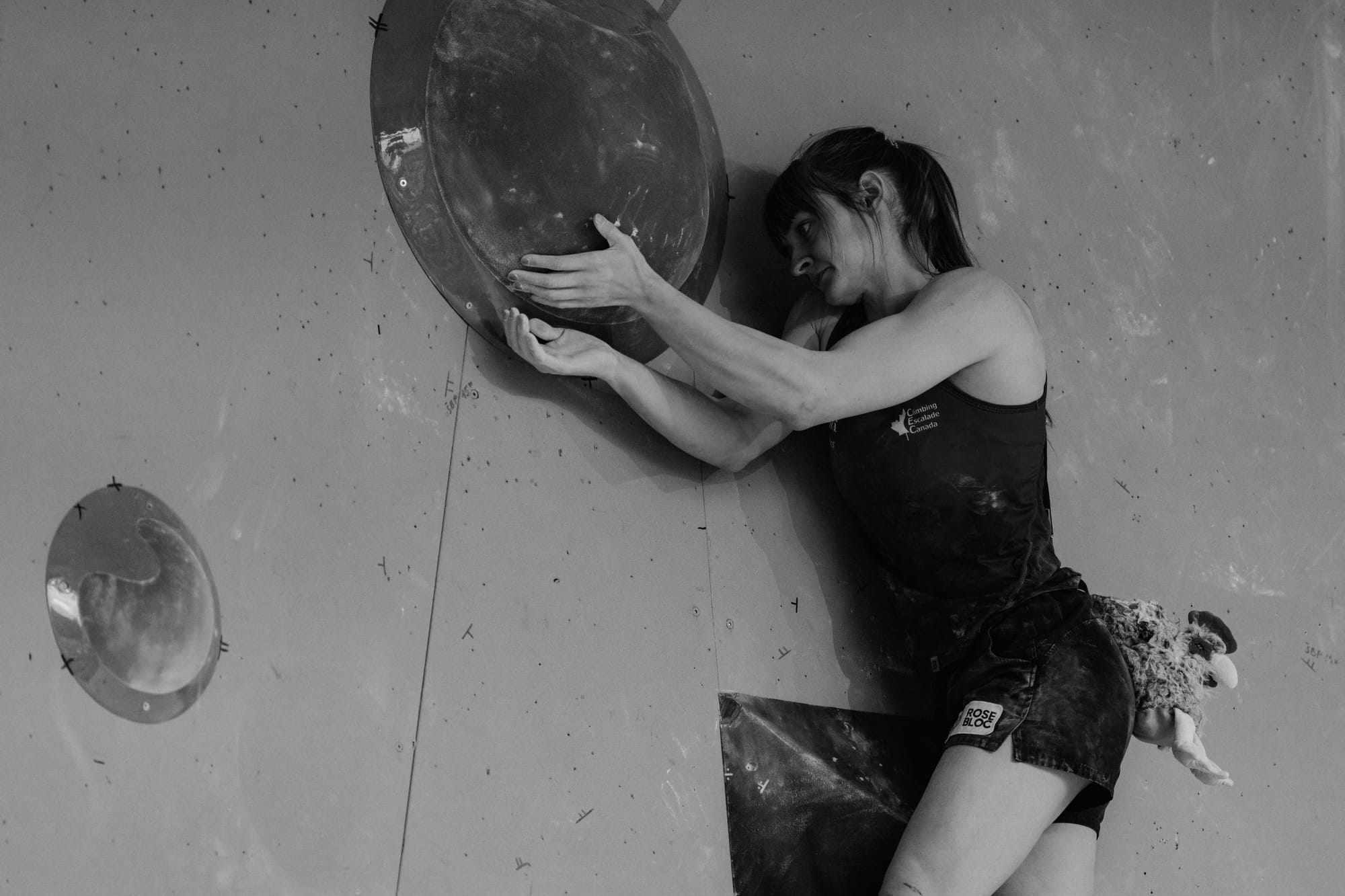
Once again, Zach advised me to forget about Prague. And this time, I wasn't eager to.
I love competing at World Cups. June becomes the most important, most eventful, and most demanding month of my year that I look forward to for eleven months. Many athletes skip an event or two over the course of the season, but I'm almost always all in every year because I love it and because I want to maximize my opportunities for growth and success.
I planned to do five events this season, but I was advised to forget about two of them because of the setting. That didn't sit right with me.
It was on the walk back to my hotel in Prague, immediately after qualifiers, that I decided I needed more.
The Salt Lake City World Cup is typically scheduled in late May, in the middle of the season. At least, that's how it's been for the last five years. For 2026, it was put way down in October. I initially planned to skip it because of its placement in the season. It's scheduled four months after the bulk of the season, and to me, that's a season of its own. I initially opted to skip it to have a longer off season and double down on the 2027 season.
However, with the way the season was shaping up for me, I wanted one more shot to make up for Prague and Bern.
So that decision was made before we headed over to Innsbruck for the "last event" of the season.
Innsbruck has been a challenging event for me, historically.
The first time I competed in Innsbruck was the summer of 2017 for the Youth World Championships. I was one attempt out of semifinals, finishing 23rd.
As a senior athlete, I've attended the Innsbruck Boulder World Cup every year since 2022, which makes this 2026 edition my sixth time stepping onto the mats in Innsbruck in my career. This year also marks the sixth consecutive time I've failed to advance to the Innsbruck semifinal round.
Seriously... is it something in the air?
This year was a good event, don't get me wrong. The separation was excellent, the boulders were well varied, and the weather remarkably held up.
The problem was, unfortunately, me.
And this is why I've been left a little confused, disappointed, and have been doing a lot of self reflecting.
The round in Innsbruck was a fair physical performance for me. I got one top and four zones. I fell matching the finish of boulder two, which was a huge loss for my score, but that's not what I'm hung up on.
I can't stop thinking about boulder five.
Boulder five was a boulder that the majority of the field completed, and I didn't. It was the boulder that pushed my score all the way down to 45th place, a pretty low result for me.
I climbed up to the last few holds fairly easily and was faced with a risky move to the finish. It looked like the intention was for climbers to jump laterally at the top of the wall and hit two holds, one of them being the finish hold. I got up there, saw the move, and was too afraid to do it.
Instead, I tried going statically to the second-last hold in a very stretched-out position, but I couldn't create the tension needed to make it work.
Then I tried that same beta over and over again with very little problem-solving. I knew it wasn't working, but I couldn't get myself out of it. I had to walk away without a top and another unsuccessful Innsbruck.
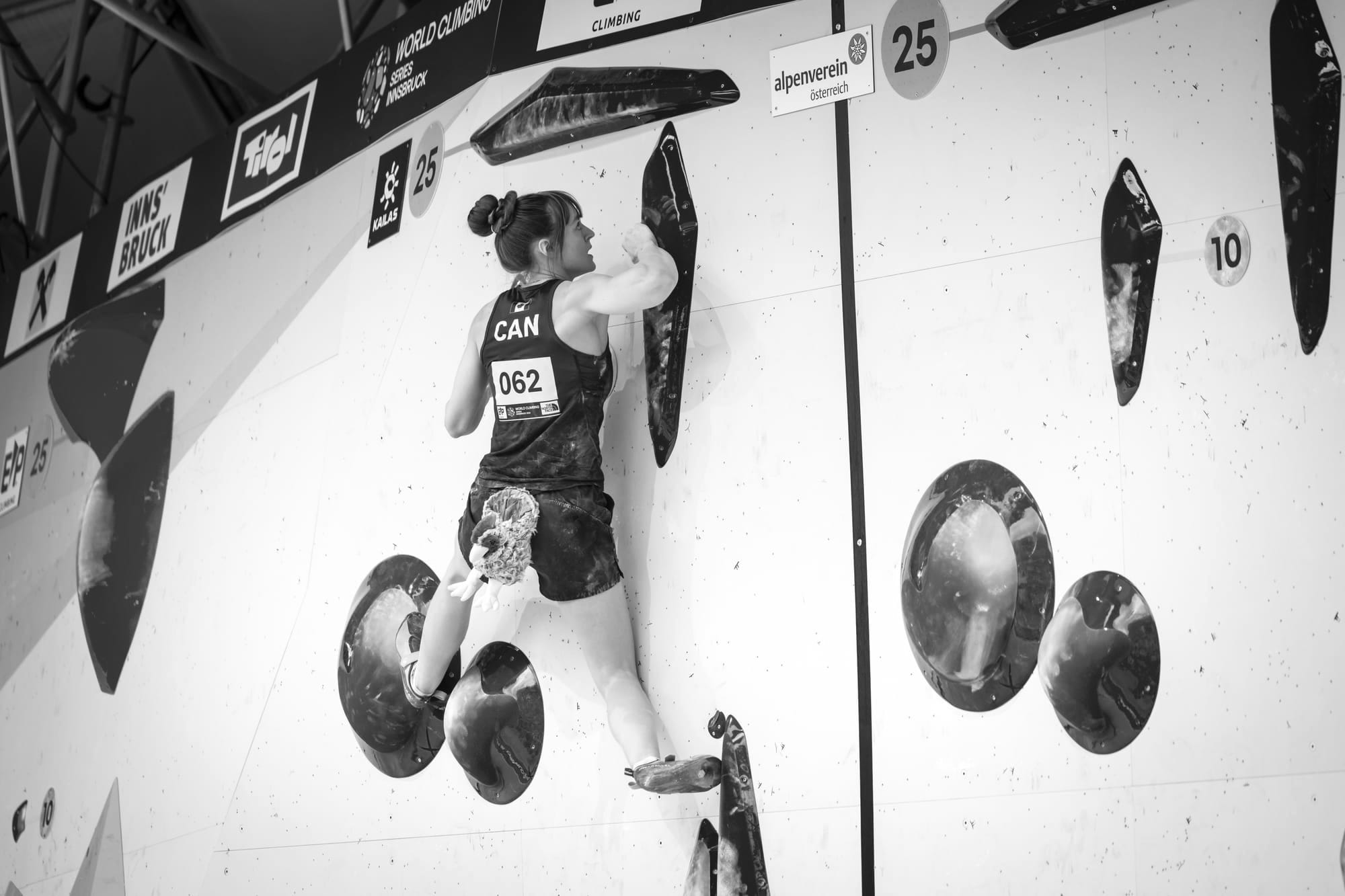
Reflecting on the performance, the field, and my result, for the first time in years, my confidence was shaken.
I've always known that I struggle with the fear of falling, especially on bigger, more dynamic moves near the top of the wall. It's something I've been okay with, because I always saw it as and extra layer of injury prevention. I've been able to avoid in training and competitions with no repercussions... until now.
The frustrating part is that the scary jump wasn't the only option I had. The alternative beta I was trying worked for other climbers, but I thought I was going way off the beaten path with it. In hindsight, there were actually quite a few non-dynamic options I could have tried, but I failed to identify them.
But no-one ever thinks of a good idea while being chased by a bear.
My problem solving ability was suppressed because I was in a state of anxiety. I couldn't see anything except a scary jump and an alternative that wasn't working. I took a boulder that should have been easy and turned it into something I couldn't solve because I was clouded by the fear.
But upon examination of this fact, it brings me some level of comfort to know that I'm not inept at beta reading; I was just in a fight or flight mindset that changed everything. But regardless, I was massively behind the field on that boulder, and it showed in my score.
I keep thinking back to the beginning of the season, before China. I remember feeling like I had broken into a new level of performance in the months before the season started. I had a great win at a local event in Montreal, my mock comps were going well, and my whole team was excited for the season ahead and cautiously optimistic about my chances of achieving some big goals.
Now, on the other side of the season, with unfortunate events in Bern and Prague, and now Innsbruck giving me a huge kick in the pants, I'm feel like I've let myself down this year.
Thoughts about my training are circling in my head. I thought I did everything I could this past off-season. I was so confident in my training. I was so present at the gym. I introduced new training tools and exercises to expand my skill set. I had no regrets going into the season.
I wasn't expecting that training to not be enough for this season's boulders, and it scares me.
I'm left with a fear that maybe we don't know what we're doing after all. Or perhaps the training was great, but out of the thousands of moves there are in climbing, I was tested on the ones I didn't prioritize at home. For something I care so much about and to have worked so hard for, it's scary to think that your best wasn't enough.
A common mental performance cue for athletes is to ensure that your self-worth isn't tied to the sport. I've never fully understood that.
I've always felt a strong sense of identity outside of sport, which is interesting considering so much of my life is wrapped around climbing. I sit on the board of directors of Climbing Canada, I chair the Athletes Commission, I run a climbing YouTube channel, I lead a high-performance climbing team in Oakville, and I climb nearly every day of my life.
But through all of that, I still see myself as a person outside of climbing. I see my work on the board, for example, as a personal development and critical thinking exercise more than an extension of the sport.
My channel is a small business that I'm constantly trying to tweak and optimize for maximum engagement. At times, it doesn't feel like climbing is the epicentre of it. And even beyond that, I have passions outside of climbing that, at times, can rival my climbing.
So I always thought I was exempt from this challenge other athletes face. I know my sport doesn't define me.
But for the first time in my career, following Innsbruck, I finally understood what tying your self-worth to the sport actually means.
Coming 45th in Innsbruck, I had an inkling that I'm not as good as I thought I was. I started to think about losing my status on the world circuit, questioning the caliber of athlete I saw myself as, and what I'm ultimately capable of in this sport.
It opened my eyes to how I was tying my self worth to climbing. It wasn't about the fear of life outside of climbing and whether I have value in the world beyond it. No, it was about my performance in the sport, and how my value in climbing depended on my results.
The conviction that I will make a final one day - a conviction I've had my entire career - was shaken after Innsbruck. And without that conviction, I realized how much emphasis I had been putting on it without knowing, and I got a window into how I would feel about myself if it's off the table.
But this all came about from one event. True - it wasn't a good performance, but it was one performance picked out of the season, and an event I've arbitrarily I've put more emphasis on than, say, the success in China this same season.
I tend to think in black and white when I look at World Cup results. Specifically semis or no semis. Looking at this season, for example, I see two semis and three no semis, therefore more bad than good.
The problem is that we're using an uncontrollable metric to evaluate performance, and even decide how I feel about myself. I can't control how the field around me performs or the boulders I'm given. The only thing that actually matters is how I performed on the boulders this season.
In reality, a good performance could leave me out of semis and a poor performance could squeak me in. Semi finals really has no weight in the reflection. When the goal is continual improvement and growth, I can't afford to be distracted by the black and white results. I need to think in shades of grey.
Now that I'm a week removed and the emotions have subsided, I can begin to think clearly again and look at the details of the season instead of the headlines. Here, we find smaller mistakes, workable deficiencies, and a strong base to build from. In fact, we see a successful season with a lot to be happy about.
Innsbruck was a poor performance this season, for sure. But one bad result doesn't erase my past achievements in this sport and more importantly, it doesn't define my worth as an athlete.
Success is also a spectrum. This isn't Talladega Nights, where "If you're not first, you're last." I made two semifinals this season. Just because I'm not one of the athletes who made every semi, or advanced to finals or podiumed, doesn't mean my season wasn't also successful along the continuum. And if there's a continuum, we think in shades of grey, and judge events by the performance and not the result, I think we've found a no-fail scenario, so long as I keep trying hard and leaving everything on the wall.
I have four months until Salt Lake City and a further six months until the start of next season. I'm not quite ready, but after I have a few weeks to decompress, I know I can trust myself to return to the training grind with determination and an unwavering conviction in myself as an athlete as we head into the first Olympic qualifiers in 2027.
Faster, higher, stronger, right?